
Introducing the first AI-driven performance tuning methodology for Patroni HA
DBtune for Patroni: Orchestrating high performance for self-hosted high availability.

For years, the PostgreSQL community has relied on Patroni as the gold standard for self-managed high availability. Patroni has successfully automated the "human factor" of failover, transforming high-stakes manual recovery into a resilient, self-healing process.
However, while Patroni high availability has solved the uptime challenge, it has not addressed performance issues. Most production clusters today are "painted into a corner"—locked into conservative, static configurations that prioritize stability but sacrifice raw speed.
DBtune is changing that. We are proud to introduce the first Agentic AI-driven tuning solution engineered for Patroni-based highly available, self-hosted clusters.
The "infrastructure tax" of High Availability
Maintaining an enterprise-grade Patroni HA cluster typically comes with a hidden cost:
- Wasted capacity: Organizations often over-provision RAM and CPU because they lack the tools to safely optimize self-hosted nodes.
- Static bottlenecks: Manual tuning in a Patroni high availability environment is an operational nightmare. A change that helps the leader might conflict with Patroni’s orchestration logic or the Distributed Configuration Store (DCS).
- The "safety" trap: Because HA is mission-critical, DBAs often leave settings at conservative defaults, leaving massive performance gains on the table.
AI-assisted performance meets production-grade reliability
DBtune bridges the gap between peak performance and mission-critical uptime. Its agentic AI is fully HA-aware, integrating directly with the Patroni REST API and major Distributed Configuration Stores (DCS), including Etcd, Consul, and ZooKeeper.
Key benefits for DBtune stakeholders:
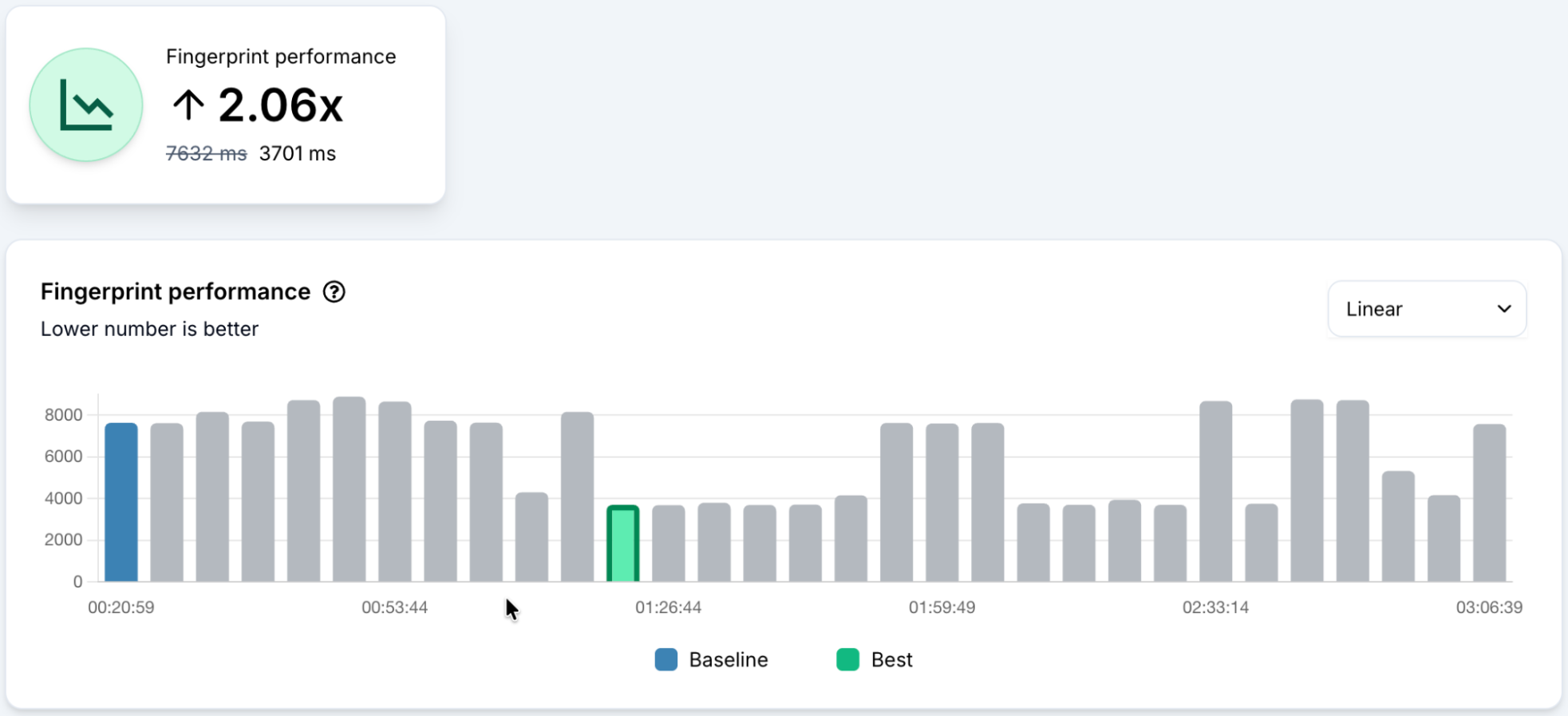
- Proven performance multiplier: DBtune has shown substantial performance improvement without any changes in the hardware footprint. Read our technical blog.
- Intelligent cluster orchestration: DBtune doesn't just tune a single instance; it understands the cluster topology. It identifies the active leader and ensures optimal settings are propagated, so your replicas are always "performance-ready" during a failover.
- Automated safety guardrails: DBtune’s AI monitors cluster health in real-time. If a failover event occurs or the DCS reports instability, it automatically halts tuning to prioritize the integrity of the Patroni HA stack.
Up until now, there was no AI-tuning methodology for Patroni users. DBtune fills this gap, providing agentic AI that handles the complexity of physical replication and cluster-wide configuration. For the majority of self-hosted production clusters, the choice used to be between "fast" and "available." By bringing agentic AI to the Patroni HA ecosystem, DBtune allows you to have both. It empowers stakeholders to slash infrastructure costs and boost application responsiveness without ever compromising on the reliability that Patroni provides.
Continue your performance journey
- Patroni technical integration: Want to see exactly how DBtune handles DCS orchestration and safety guardrails? Read our technical blog for a deep dive into the architecture.
- Patroni documentation: Ready to optimize your high-availability setup? Read our step-by-step Patroni integration guide to learn how to deploy the DBtune agent and start orchestrating performance across your self-hosted clusters today.
- CloudNativePG (CNPG) integration: Running on Kubernetes? Discover how to tune CloudNativePG without the guesswork using DBtune’s native K8s integration.
- Real-world success: Discover how Midwest Tape achieved a 10x performance boost on AWS RDS and how Papershift cut query times by 50% and halved CPU usage with zero manual intervention.
- Marketplace integration: DBtune is available on the AWS Marketplace and Microsoft Marketplace, offering seamless AI-powered performance tuning for your Microsoft Azure and Amazon RDS for PostgreSQL instances.
- EPAS support: Enterprise users can now leverage automated tuning for EDB Postgres Advanced Server (EPAS), bringing agentic AI to the most demanding Oracle-compatible environments.
Try DBtune for free on up to 3 databases or book a demo today to see agentic AI for PostgreSQL in action.
Frequently Asked Questions (FAQs)
Q: What is Patroni HA and why is it used for PostgreSQL?
A: Patroni HA is a template for customized, high-availability PostgreSQL solutions. It uses a Distributed Configuration Store (DCS) like Etcd or Consul to manage cluster states and automate failovers. For businesses, this means mission-critical data remains accessible even if a primary server fails, providing the backbone for enterprise-level uptime.
Q: How does AI-driven tuning improve Patroni high availability clusters?
A: While Patroni handles the "availability" of the cluster, it doesn't automatically optimize it for performance. Patroni high availability clusters are often left at conservative "out of the box" settings to avoid instability. DBtune’s agentic AI analyzes your specific workload and safely adjusts parameters to maximize throughput and reduce latency, ensuring your HA cluster isn't just reliable, but also high-performing. For more information, read our documentation.
Q: Is AI tuning safe for production-level self-hosted clusters?
A: Yes. Safety is the primary concern for any Patroni HA environment. DBtune is built with "HA-awareness," meaning it integrates directly with the Patroni REST API. If the cluster enters a degraded state or a failover occurs, the AI instantly triggers a safety halt and reverts to a stable baseline. This ensures that performance optimization never comes at the cost of cluster integrity. For more information, read our documentation.
Q: Can DBtune help reduce the "Infrastructure Tax" on my HA setup?
A: Typically, high availability requires significant hardware overhead (redundant nodes). Often, companies over-provision these nodes because they can't precisely tune them. By using DBtune to achieve x times performance improvement on your existing hardware, you can often delay expensive hardware upgrades or even downsize instances while maintaining the same performance targets.
Q: Does DBtune support all Patroni configurations?
A: DBtune supports most standard Patroni configurations, including the community upstream distribution using Etcd, Consul, and ZooKeeper.
However, Kubernetes-based deployments are not supported at this time**.** This is because the DBtune agent is designed for host-centric environments, whereas Kubernetes utilizes a centralized management architecture.
Q: How long does it take to see results in a Patroni environment?
A: Unlike manual tuning, which can take weeks of benchmarking, DBtune’s agentic AI begins identifying optimization opportunities immediately. The performance gains can be seen in hours, all while the AI maintains the strict orchestration constraints required by Patroni high availability.