
DBtune at PGConf EU 2025: AI-powered tuning, the booth, the AI summit, and Workload Fingerprint
A recap of all the activities of the DBtune team at PostgreSQL Conference Europe 2025 in Riga.

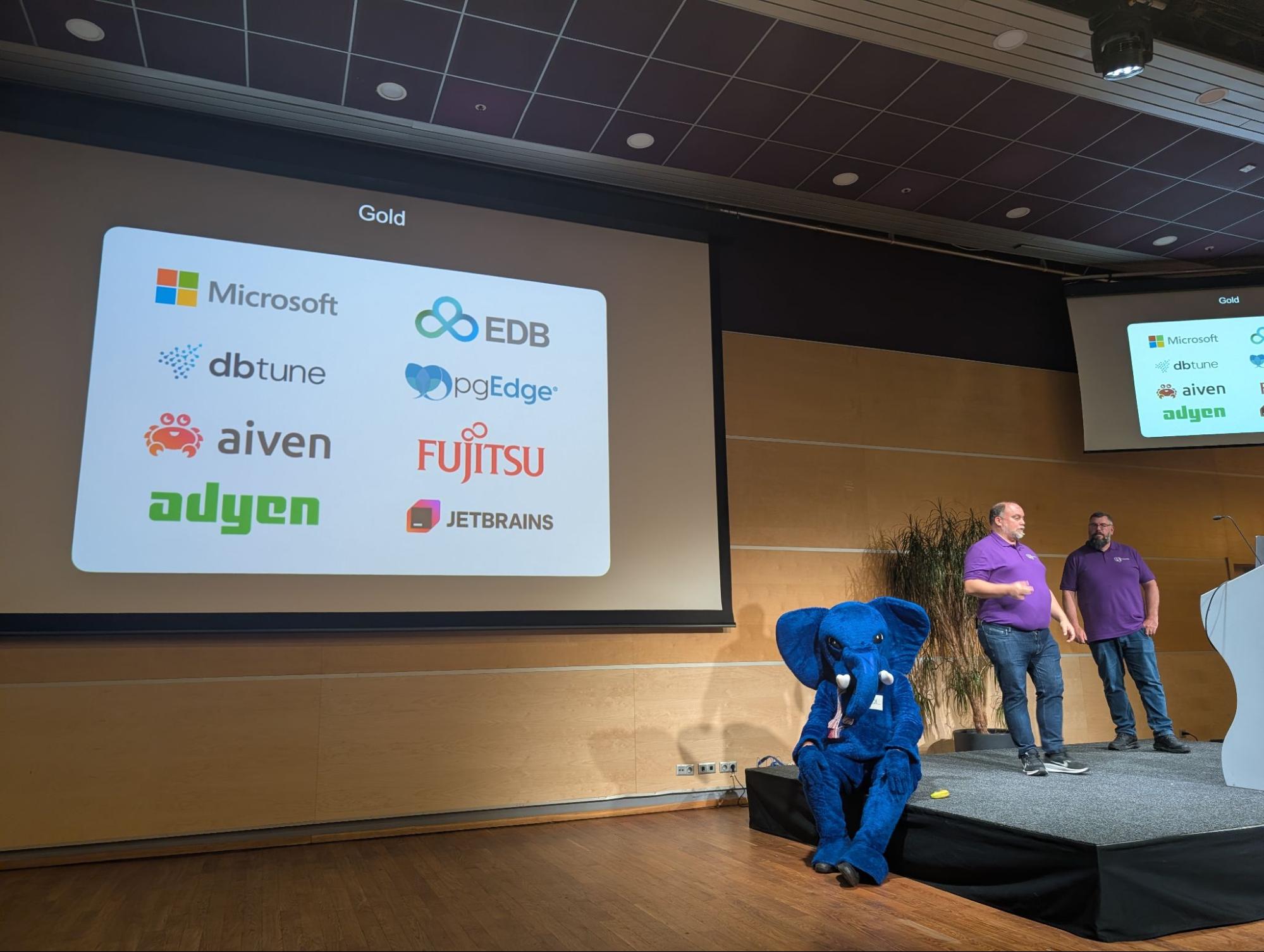
DBtune is proud to report a highly successful engagement at PostgreSQL Conference Europe 2025 in Riga, Latvia. As a Gold Sponsor this year, our participation underscores our deep commitment to the PostgreSQL community and our dedication to pushing the boundaries of database performance through AI-powered tuning.
Our presence this year was marked by high-energy booth activities, exclusive demos of DBtune, and pivotal contributions to the inaugural PostgreSQL & AI Summit.
1. The hub of innovation: Our sponsor booth
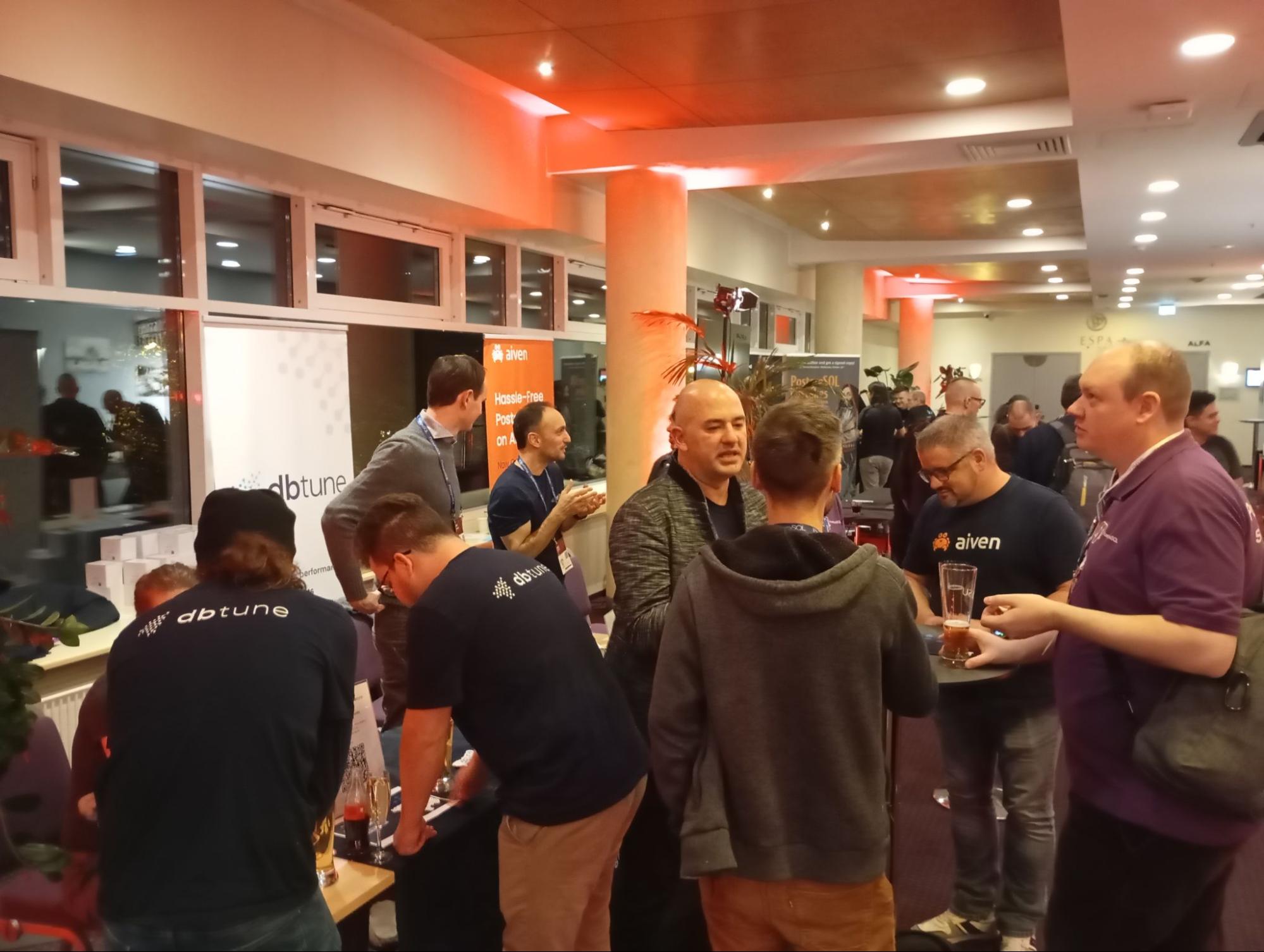
The DBtune booth served as a major point of contact and conversation throughout the conference. We were thrilled to meet hundreds of DBAs, developers, and engineers, engaging them with discussions about their most challenging performance issues.
We handed out plenty of DBtune swag, including t-shirts and mugs. Didn’t get your T-shirt or missing a mug? Contact me at ellyne@dbtune.com.
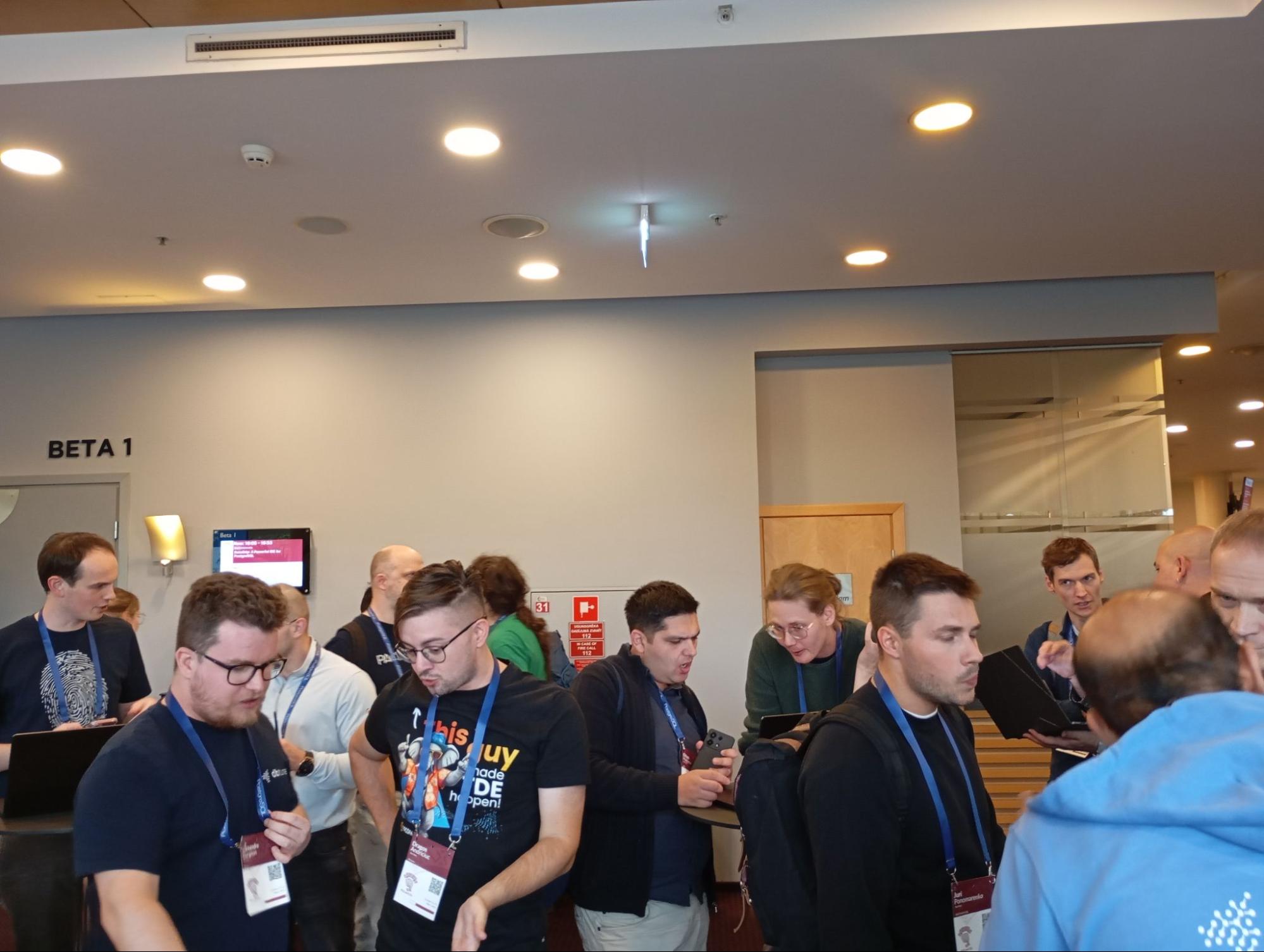
The true highlight of the booth, however, was providing live demos of our recent DBtune v3 release, which includes the new groundbreaking Workload Fingerprint method. This new iteration of our core technology allows users to transform raw performance telemetry into clean, reliable input signals for tuning. These demos not only demonstrated the power of AI autonomous tuning but also provided us with invaluable direct feedback from our community, which helps shape the product roadmap.
![The winner of our conferance raffle holding the Raspberry Pi 5 Starter Kit prize].](/images/blog/blogs/dbtune-at-pgconf-eu/raffle-winner.jpg)
Congratulations Håvard Bruun-Olsen, the lucky winner of our conference raffle, who took home a brand-new Raspberry Pi 5 Starter Kit!
2. Organization of the PostgreSQL & AI Summit
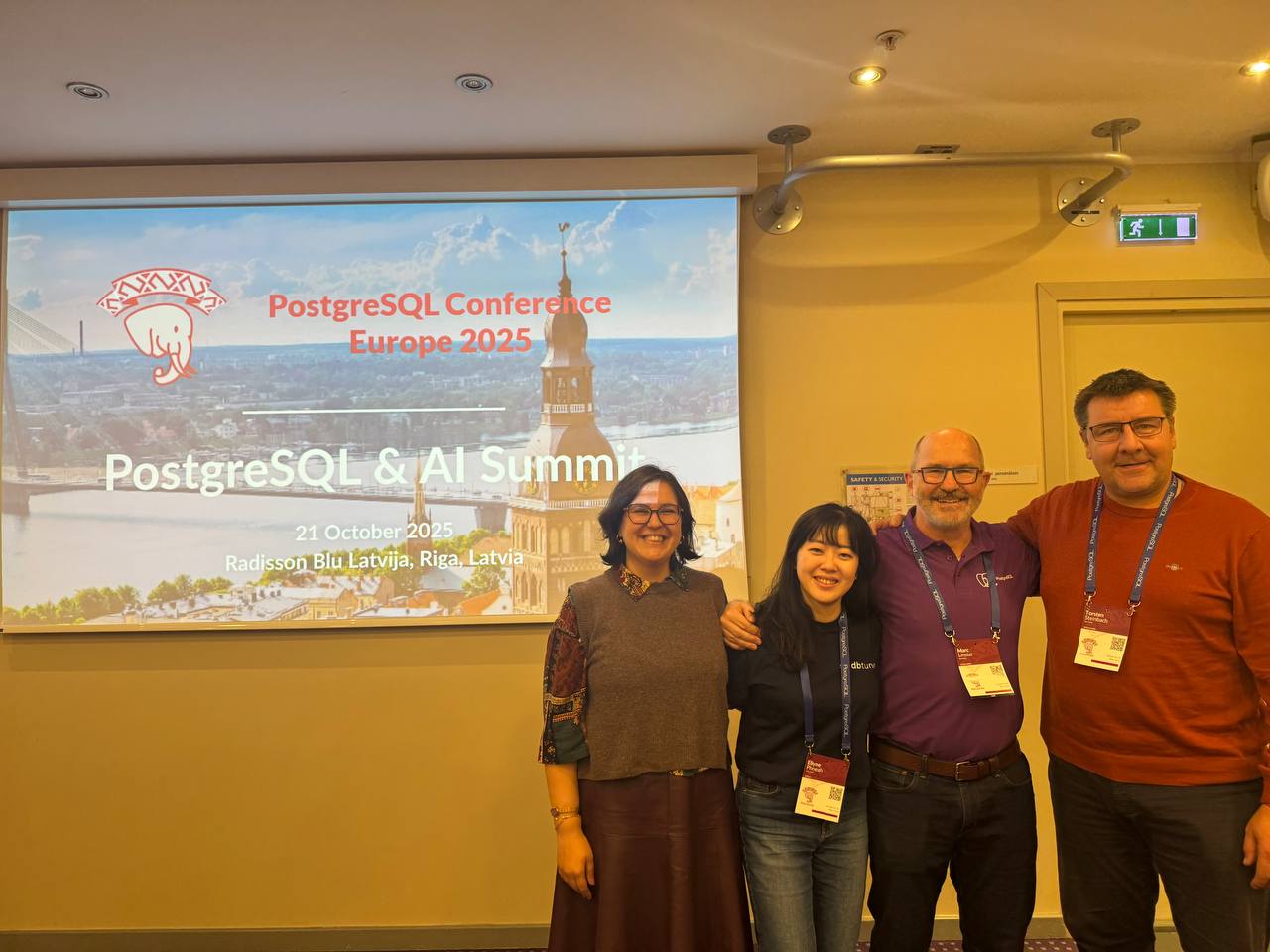
I had the opportunity to be one of the leading forces behind the PostgreSQL & AI Summit, a highly successful half-day event co-hosted with Gulcin Yildirim Jelinek and Torsten Steinbach.
The summit was structured to explore two critical aspects of the PostgreSQL and AI nexus:
- Vector & RAG (Retrieval-Augmented Generation): Focused on using PostgreSQL as a powerful backend for intelligent applications, featuring sessions on vector embeddings and semantic search with
pgvector. - AI & Tools: Centered on utilizing Machine Learning to enhance and manage PostgreSQL itself, covering topics from building intelligent DB agents to our specialty: AI-powered performance tuning.
The DBtune team shared exciting talks on leveraging AI for database optimization:
- Marc Linster's opening keynote explored the unified transformation: of AI for Postgres (smarter DB), Postgres with AI (native capabilities), and Postgres for AI (data foundation), showing how database and AI boundaries are dissolving. Read his blog post to learn more.
- Luigi Nardi introduced Workload Fingerprint, a novel method for reliable PostgreSQL performance assessment evaluation, especially in live production systems.
- Mohsin Ejaz shared essential insights on building safeguards and safety measures for automated tuning.
- Erik Hellsten presented a machine learning framework for analyzing which parameters actually matter for performance.
The Summit confirmed the PostgreSQL community’s growing consensus: The path to safe, effective autonomous tuning requires robust data cleaning methods, a principle central to DBtune’s methodology.
Read more about the summit here.
3. Talk and live demo: AI-driven tuning for all PostgreSQL flavors
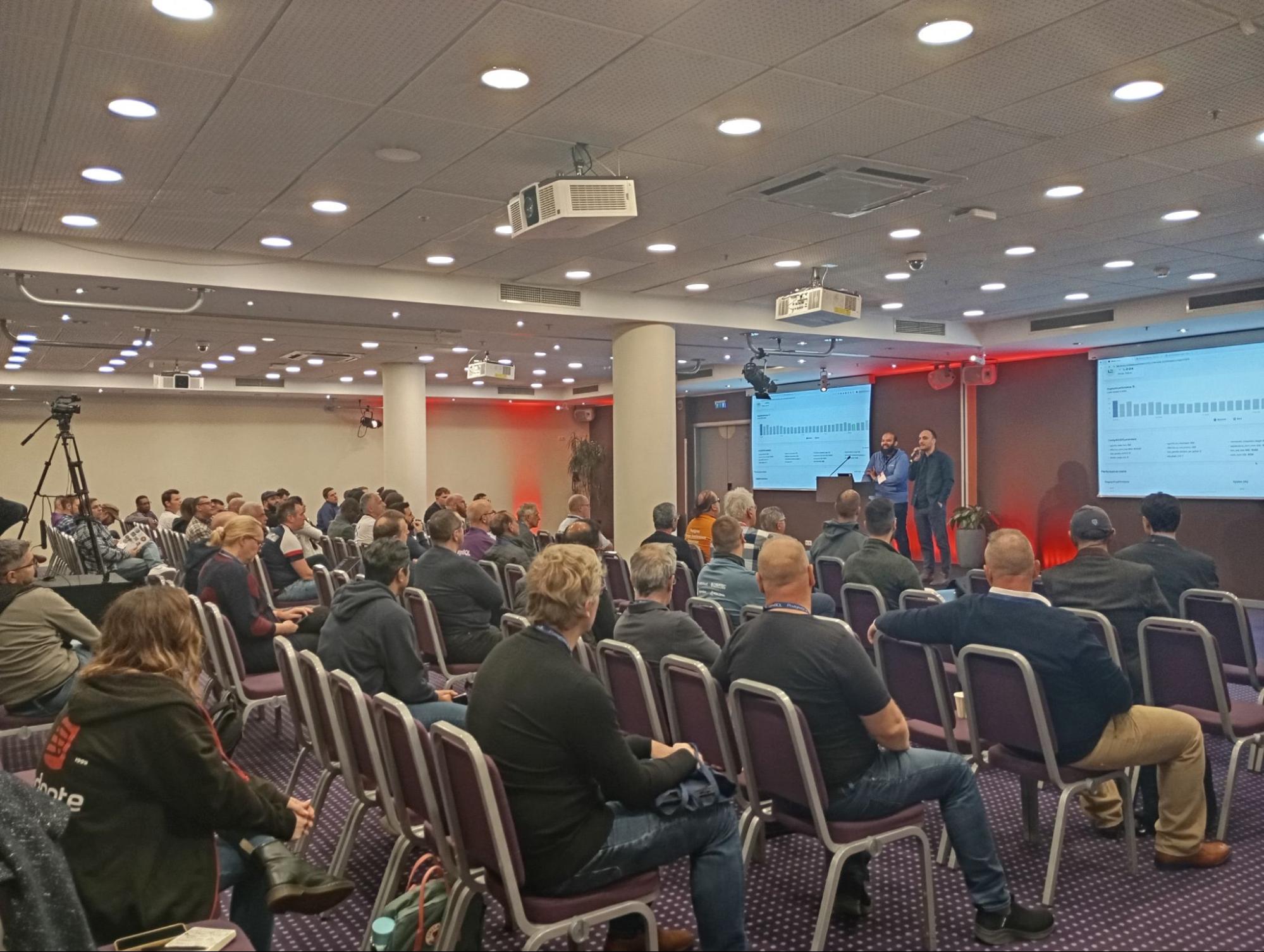
Dr. Luigi Nardi presented “DBtune: AI-driven performance tuning for all PostgreSQL flavors”, a product based on 10+ years of his AI research and teaching at Stanford and Lund University, to a packed room of attendees eager to learn how to escape the "error-prone guessing game" of manual tuning.
The talk directly addressed the core enterprise pain points: Manual PostgreSQL tuning leads to volatile performance, costly infrastructure over-provisioning, and unnecessary downtime. For large, heterogeneous database fleets, this problem is severely magnified, causing spiraling infrastructure costs and unpredictable behavior.
Luigi Nardi then introduced the new major release of DBtune, demonstrating how our autonomous agent analyzes unique workloads and adapts server parameters in real-time to optimize resource utilization and query response time. The presentation concluded with a compelling demonstration of DBtune's adaptive approach, which includes a direct comparison against static methods like PGTune, showing the superior performance and efficiency of our solution.
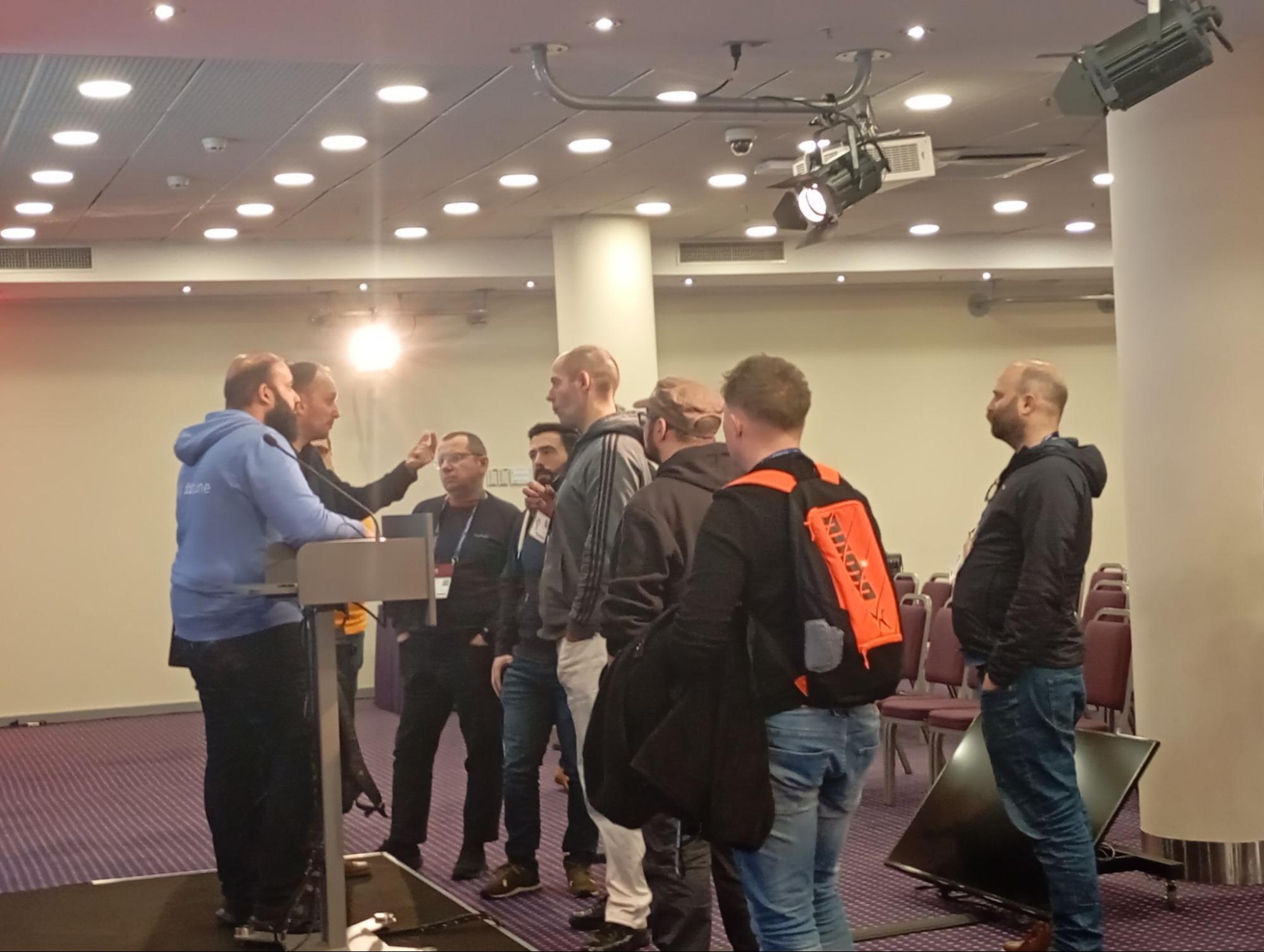
Following the presentation, Dr. Nardi and Mohsin Ejaz conducted a live demo showing how DBtune operates seamlessly across diverse environments—from self-hosted community PostgreSQL to managed cloud services like Amazon RDS, Aurora, Google Cloud SQL, and Aiven.
Attendees saw firsthand how to automate tuning, achieve predictable high performance, and drive significant cost optimization.
View Luigi’s slides on “AI-driven tuning for all PostgreSQL flavors” here.
4. Marc Linster’s presentation: Implementing slowly changing dimensions in Postgres
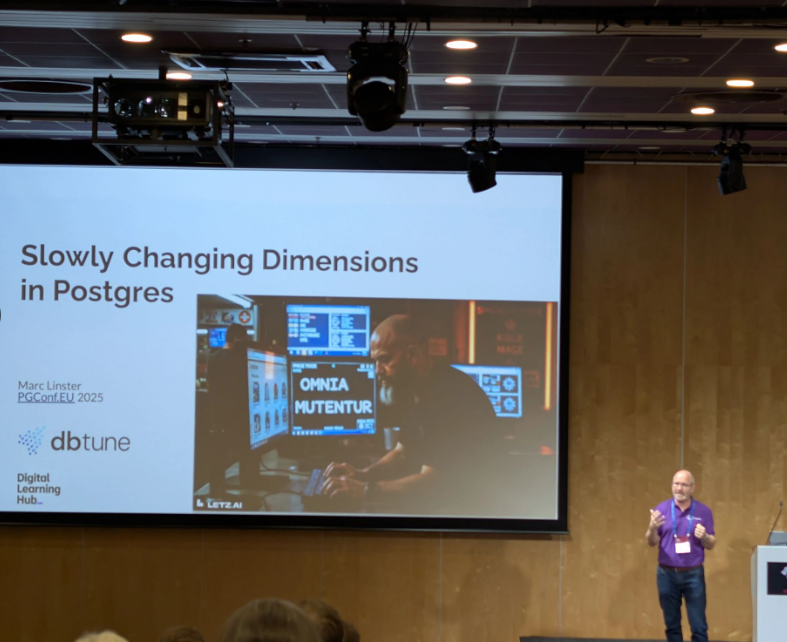
Marc Linster, our DBtune Fellow and one of the organizers of PGConf EU 2025 in Riga, Latvia, also presented a talk at PGConf.EU 2025 focused on Implementing Slowly Changing Dimensions (SCDs) in Postgres, providing a comprehensive review of the six standard types of SCDs and showcasing how PostgreSQL's advanced features can simplify their practical implementation. SCDs are crucial for data warehousing, as they define how to track changes in reference data—like pricing or employee hierarchies—over time, a challenge that, if managed manually, can lead to complex and error-prone systems.
His presentation aimed to demonstrate that PostgreSQL, far from being a database that complicates this process, offers elegant and powerful native tools to handle the common pitfalls of dimensional modeling, especially for the most comprehensive, but often most challenging, Type 6 SCD.
View his slides on “Implementing Slowly Changing Dimensions in Postgres” here.
5. Lightning talk: Workload Fingerprint, the foundation of reliable AI tuning
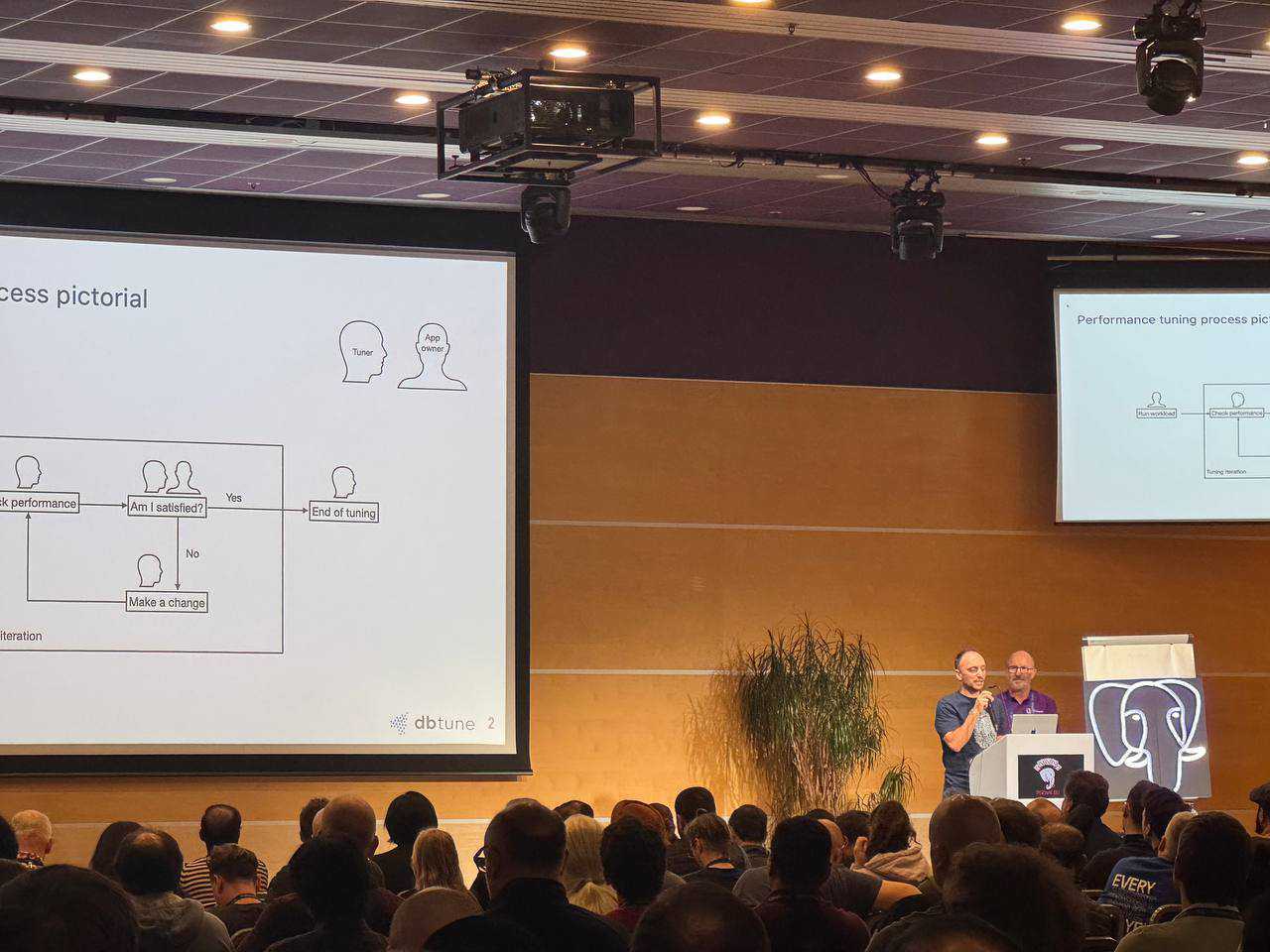
In a high-impact lightning talk, Luigi Nardi shared the core science behind DBtune’s reliability mechanism: “Workload Fingerprint: A data cleaning pipeline for effective AI performance tuning."
He emphasized that traditional metrics like Average Query Runtime (AQR) are inherently too noisy due to cache effects, multi-tenancy, and fluctuating query distributions. This noise is the root of the “garbage in, garbage out” (GIGO) problem in AI database tuning.
The Workload Fingerprint method addresses this by:
- Creating a robust, cleaned-up Key Performance Indicator (KPI) from raw data.
- Transforming performance measurement from an abstract art into an engineering discipline.
This ensures that the input signal fed to the DBtune AI agent is reliable, leading to safe, explainable, and effective tuning decisions.
Luigi introduced this method at PGConf NYC 2025. View his slides on “Workload Fingerprints: A key to understanding PostgreSQL performance” here.
Conclusion
PGConf EU 2025 was an outstanding event for DBtune. We are energized by the community's response to our v3 release and the clear need for AI-driven, autonomous tuning solutions.
We extend a huge thank you to everyone who stopped by our booth, attended the Summit, and participated in our sessions. We are already looking forward to continuing our contribution to the PostgreSQL community and can't wait to be back!
Start optimizing today
Ready to experience predictable high performance for your PostgreSQL fleet? Start your free trial of DBtune today!